Why matching paint is harder than it looks
Two cars with the same factory color rarely match perfectly, which is why good paintwork is more than pouring from a can.
October 14, 2026 · 4 min read
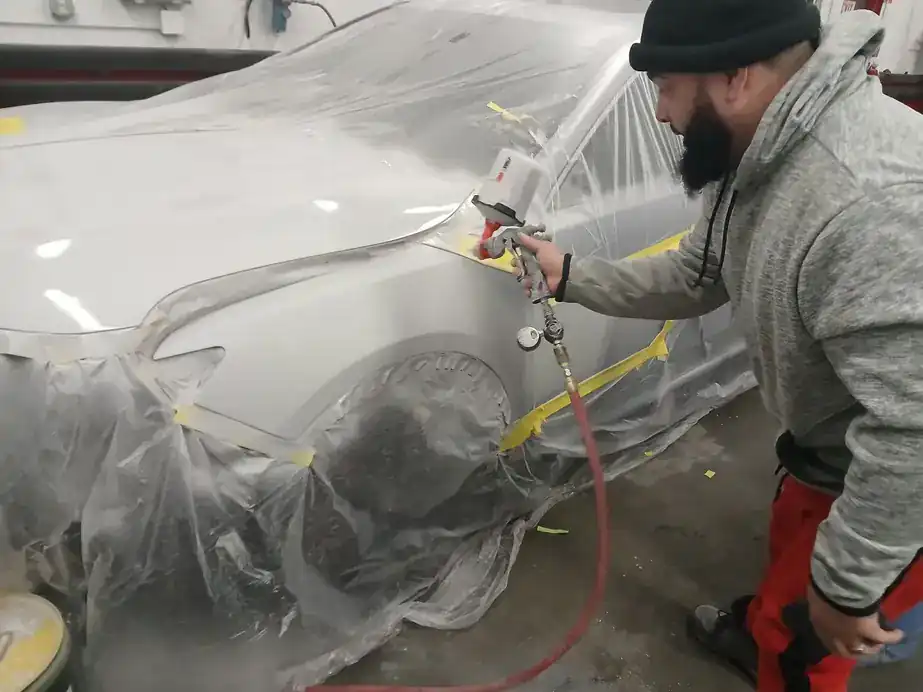
Pull two cars of the same make, model, year, and factory color off a lot and park them side by side in the sun. They won't match perfectly. That surprises people, but it's true, and it's why a repainted door can look a shade off from the fender next to it when the work isn't done carefully. Paint matching is part chemistry, part measurement, and part patience.
The code on the sticker isn't the color on your car
Every vehicle carries a paint code, and it's the starting point. But the code describes the formula as it left the factory, and factories apply paint with machines, sometimes at more than one plant, with batches that vary slightly. Then your car lived outdoors. Years of sun, road salt, winter, and summer have dulled the original finish. A fresh coat mixed straight from the code can come out looking newer and brighter than the car around it.
So the first job of a good painter is to look at the actual car, in good light, and decide how far the mix needs to be adjusted. Sometimes the answer is a nudge. Sometimes it's a lot.
Metallic and pearl: the flake problem
Solid colors are the forgiving ones. Metallic and pearl finishes contain tiny flakes that reflect light, and how those flakes lie in the paint changes the color you see. Spray a little wetter and the flakes settle flat, so the color reads darker. Spray drier and they stand up on edge, so it reads lighter. Look at the panel head on and then from a sharp angle, and the shade can shift. Painters call that flop, and it's the reason two samples can match straight on and still fight each other from the side.
Technique, gun settings, distance, and even the temperature in the booth all feed into the result. This is craft, and it takes years of repetition to get right.
Blending: the trick that makes a repair disappear
Even with a great mix, a painter rarely stops the new color dead at the edge of the repaired panel. Instead, the color gets blended into the neighboring panel, faded out across a stretch of it so your eye never finds a hard line. Then clear coat goes over the whole area so the gloss is uniform from one panel to the next.
Customers sometimes ask why we're painting part of a fender or door that wasn't damaged. That's the reason. A repair that stops at a panel seam hands the eye an easy place to catch the difference. Blending hides it. It's extra care, and it's what separates a repair you notice from one you can't find.
What a computer mixing station changes
In our shop, color work starts at a computer refinishing and mixing station, backed by a computerized color matching system. A system like that does a few things well. It holds the formula for your paint code, including the variants that exist for that code. It measures the ingredients precisely instead of by eye. And it records the mix, so if we need more of the same color tomorrow, we can make it the same way.
What it doesn't do is paint the car. A technician still has to compare the mix against your vehicle in daylight, adjust it, and spray it correctly. The station gets us to a far better starting line. The craftsmanship decides the finish. Together they're how we aim for a match you can't spot from across the lot.
What you can do before and after
- Bring the car in reasonably clean, since dirt and oxidation can hide the true color
- Mention any earlier paintwork, because a previous repaint may not match the factory finish
- Look at the finished repair outside in daylight, not just under shop lights
- Check it from straight on and from an angle, in sun and in shade
Shop lights are kind to everything. Sunlight isn't, and sunlight is where your car lives. Walking around the finished repair outside, with someone who can answer questions, is the best way to be sure you're happy with it.
Matching is a promise we stand behind
Our auto body repairs carry a lifetime warranty for as long as you own the vehicle, so if a finished panel ever looks wrong, bring it back. If you have questions about how a particular color will come out, or you want someone to look at paint that's faded or damaged, call Ray's Travelers Auto Body at (401) 461-9200 or stop by 299 Allens Ave. We're glad to look at the car and tell you honestly what it needs.
Ray's Travelers Auto Body, (401) 461-9200
Call (401) 461-9200More articles
Hit and run in Providence: what to photograph and write down first
The first hour after a hit and run decides how smooth the rest goes, and most of it is just photos, notes, and two phone calls.
How your body shop and your insurance company actually work together
You shouldn't have to carry messages between the shop and your insurer, and here's how it works when nobody's dropping the ball.